
Two adjoining homes on Langridge Street.
207 and 207A Langridge Street are two adjoining townhouses on separately titled blocks in Abbotsford, Melbourne. Designed by two concept architects, built by a custom builder, and completed in 2023 after two and a half years of construction — much of it through Melbourne’s long lockdown period.
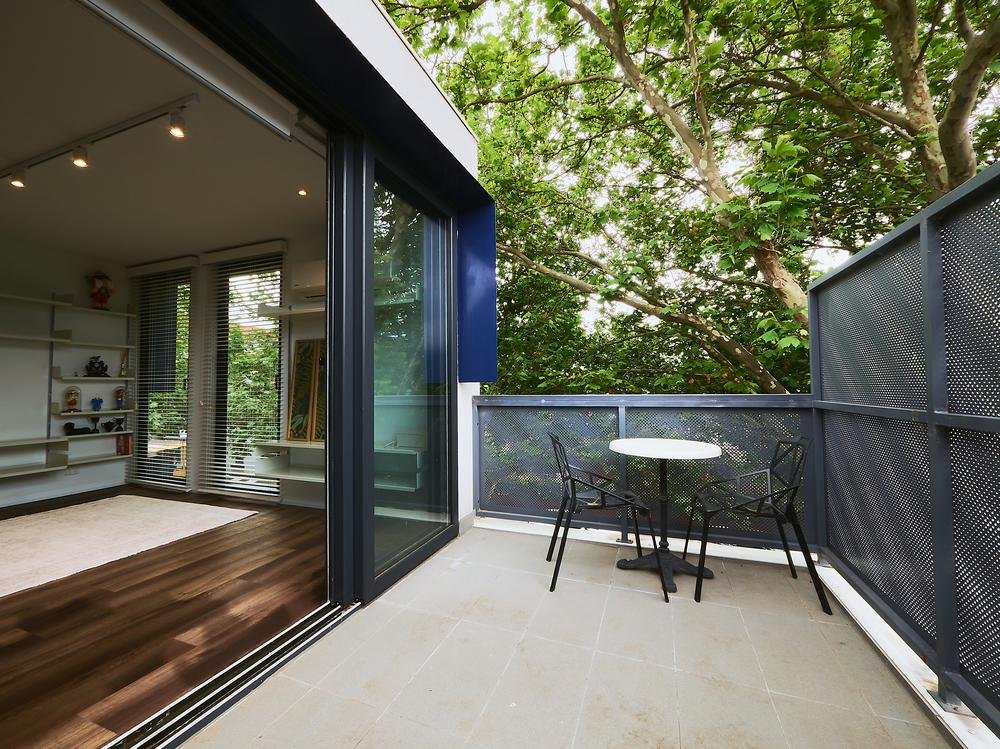
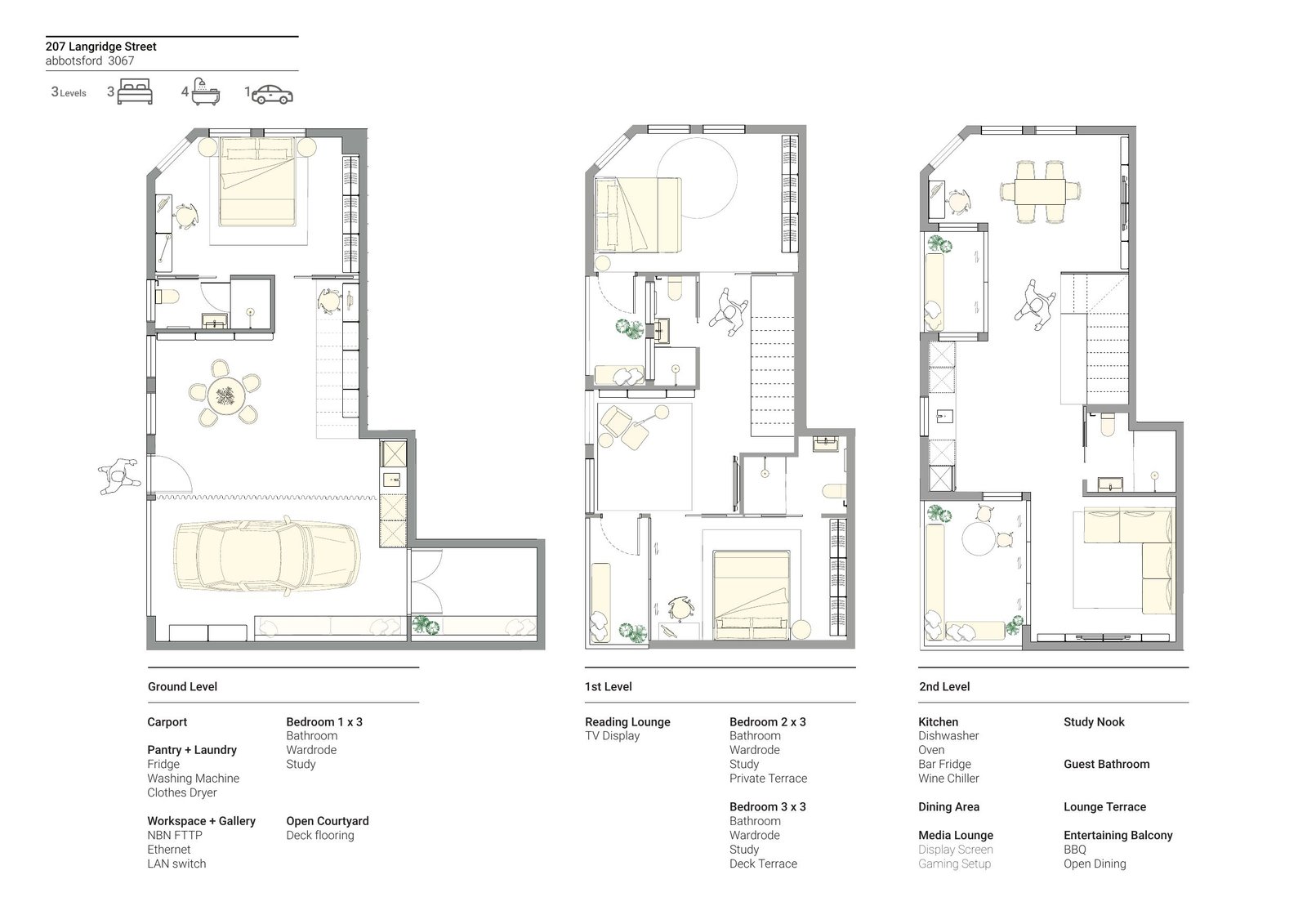
Each residence is a complete three-level home in its own right: four bedrooms with ensuite bathrooms, a dedicated home office on the ground floor, a central courtyard that brings light into the heart of the plan, and a top-floor living zone that opens onto a tree-top terrace. The two homes share the one address on the street — 207 Langridge — but sit on separate titles.
Concept architects: Illya Sender, IS Design & Ton Vu, Atlas Design · Custom builder: Hardran Industries
Three levels of considered living.
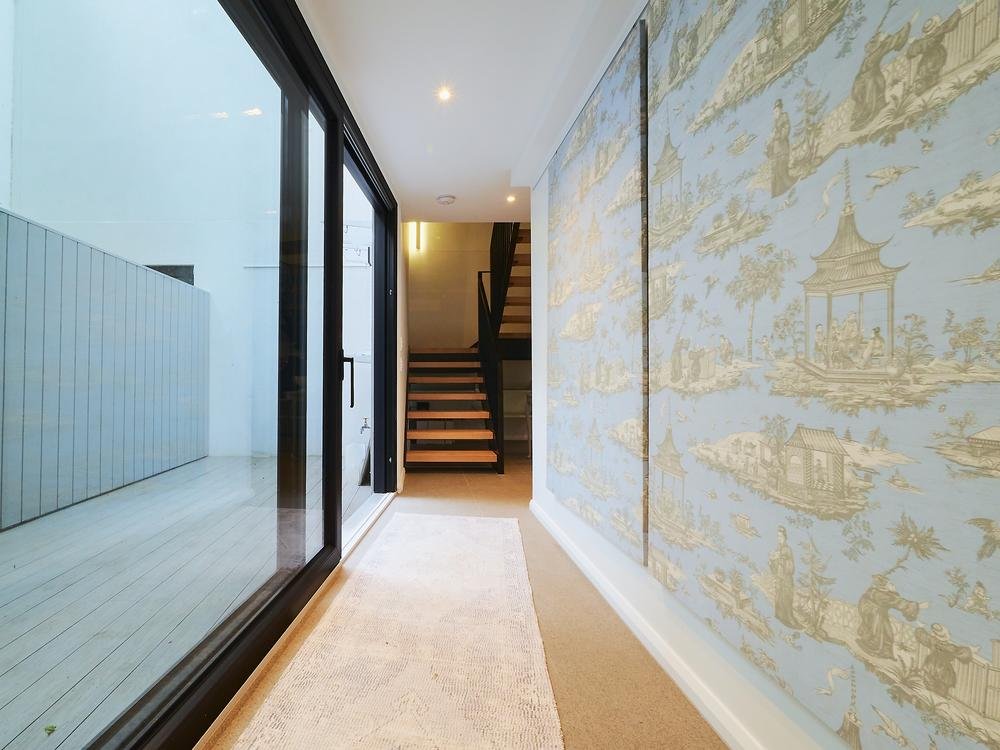
The plan reads from the street upward. At the ground floor, a private bedroom suite and dedicated home office open off a courtyard-side hallway. The first floor holds the remaining sleeping zones and their ensuite bathrooms, with two bedrooms opening to a covered outdoor lounge. The top floor is given over entirely to living and entertaining — kitchen, dining, and a living room that opens to the tree-top terrace, with direct views of the Carringbush Hotel, a working Victorian-era pub built in 1889.
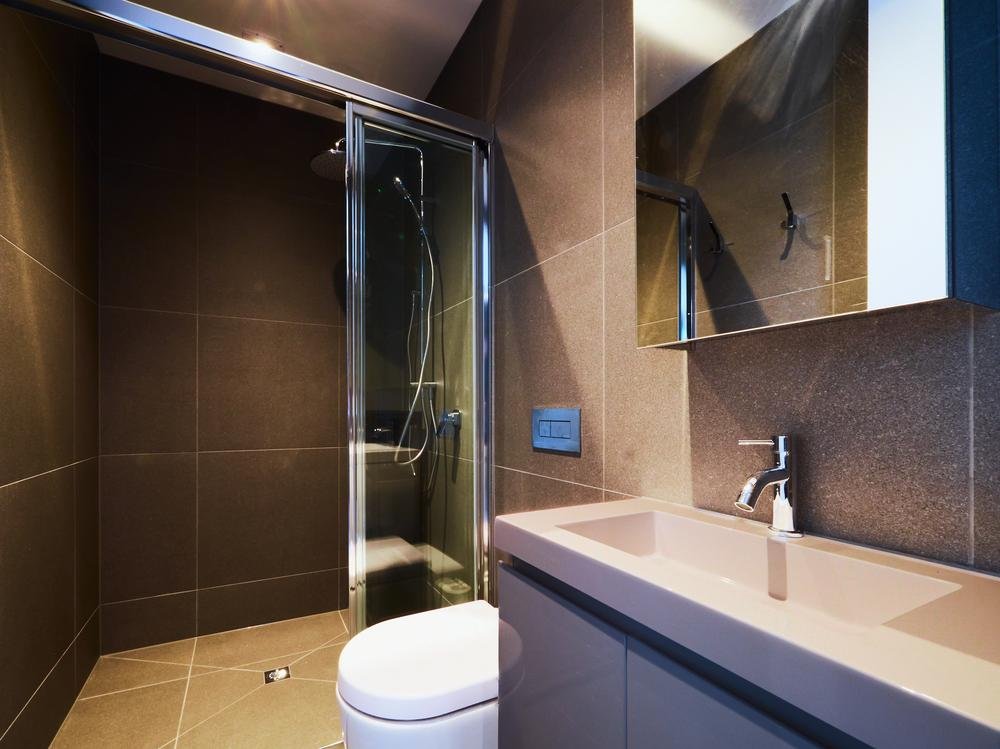
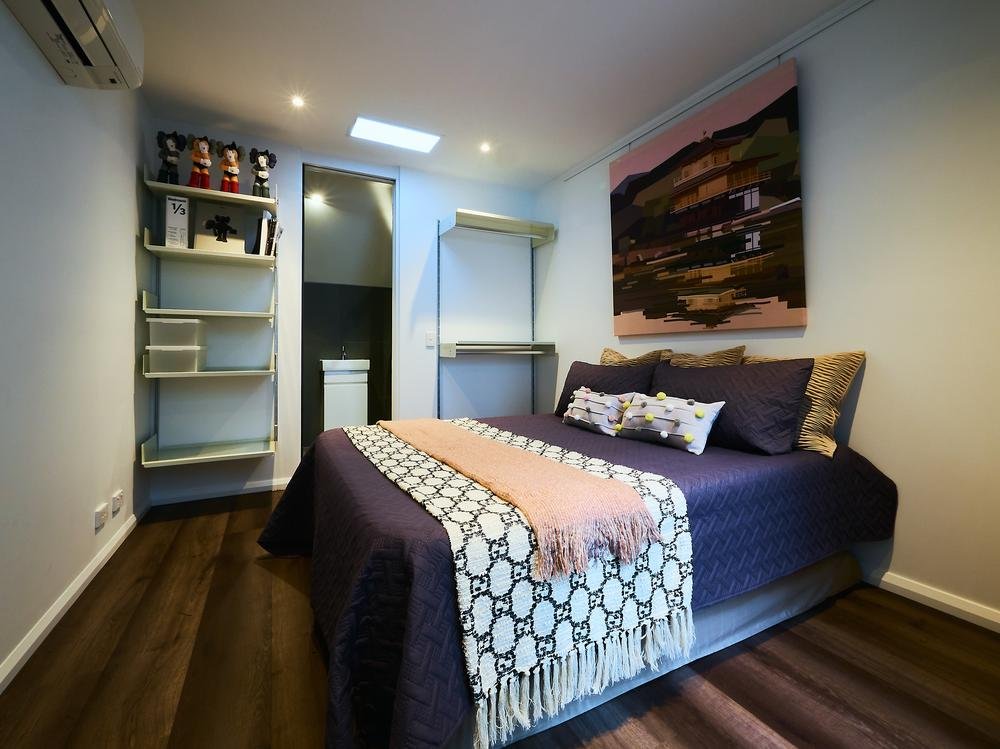
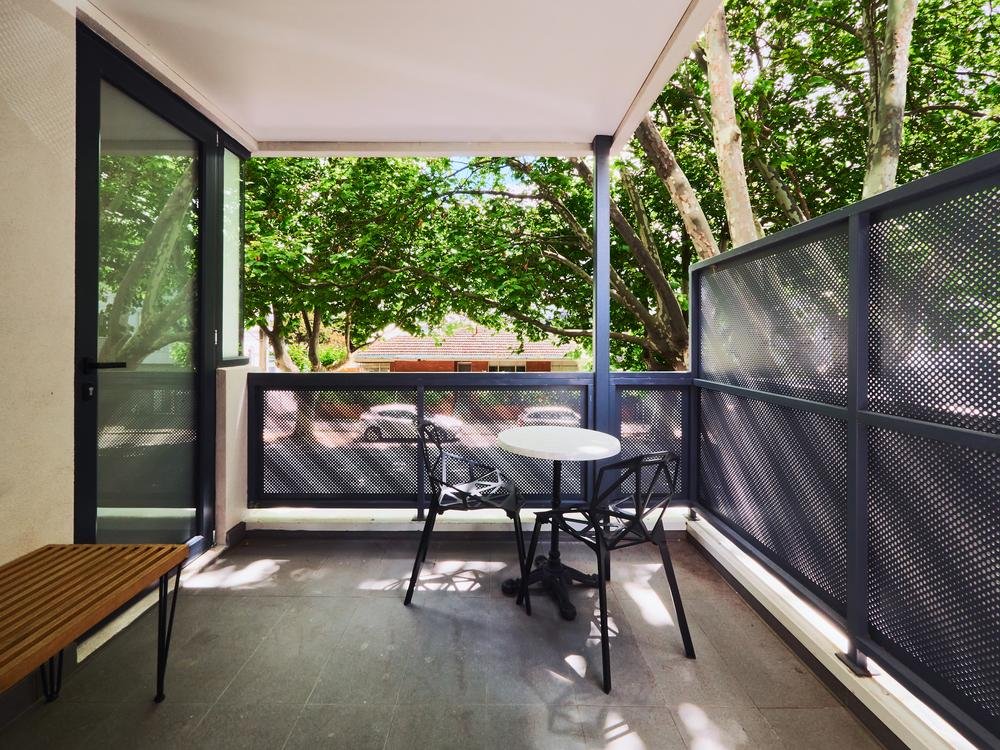
Details, by name.
Each element was specified, not defaulted. What the house is made of, in plain terms.
German UPVC windows
Double-glazed tilt-and-turn windows throughout, for thermal and acoustic performance. The pattern is common in northern-European residential and uncommon in Australian new-build.
Modular shelving
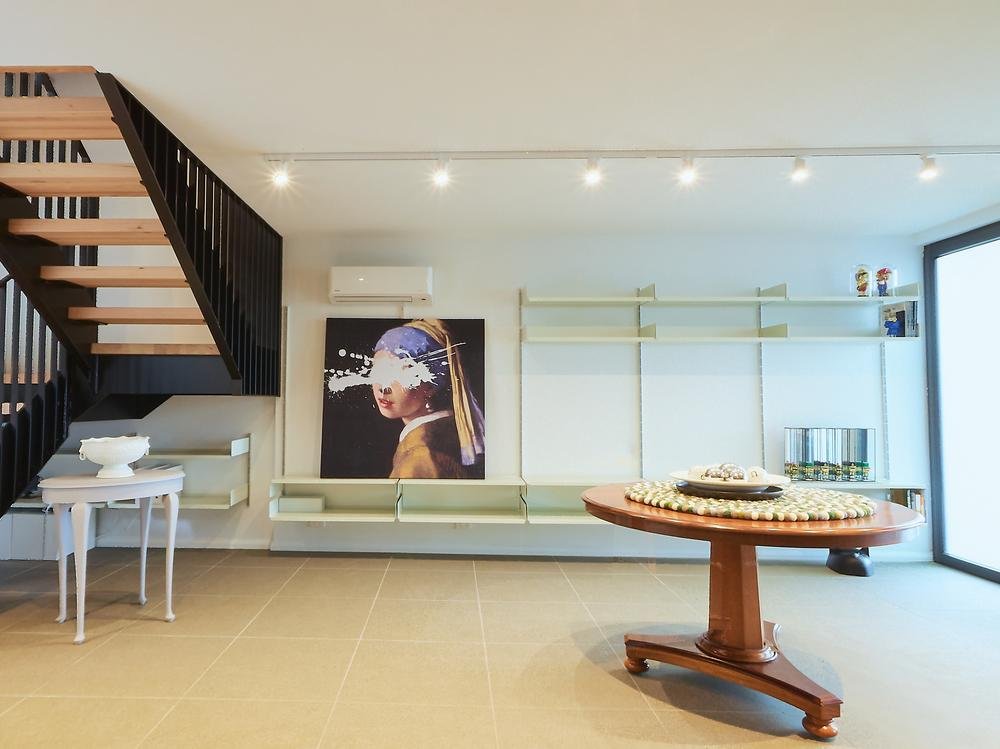
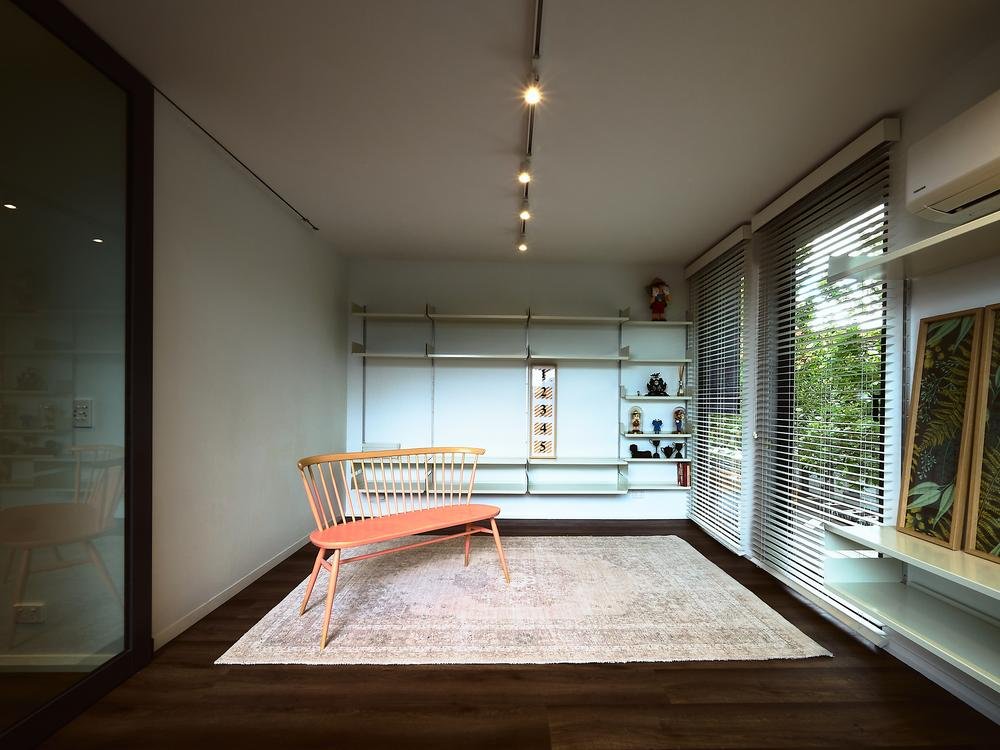
Wall-mounted modular shelving runs through the living rooms and reading areas of both homes — a flexible, open system that adapts to how the rooms are used over time.
Custom architect-designed stair
Timber treads on a black steel structure, connecting all three levels. Designed specifically for these homes, not selected from a catalogue.
Hörmann garage door
German-engineered sectional garage door on each title, with secure internal access to the ground floor.
NBN fibre and hardwired ethernet
Fibre-to-the-premises, whole-home mesh Wi-Fi, and RJ45 hardwired ethernet in every room. Ready for remote work, studio use or connected-home systems.
Keyless entry and HD CCTV
Digital keyless front-door entry and external HD CCTV recording, integrated into the design of the facade rather than retro-fitted.
Cavity sliding doors
Concealed sliding doors between the ground-floor suite and the main hallway — a spatial strategy rather than a hardware choice, giving each level the option of opening up or closing off.
40-year depreciation schedule
A full tax depreciation schedule has been prepared for the 2023–2063 period.
Three levels, two titles.
Each residence spans approximately 168 sqm across three levels, with sleeping zones separated from living and working zones. The plans mirror: 207 and 207A read as a pair from the street, with each home self-contained behind its own front door.
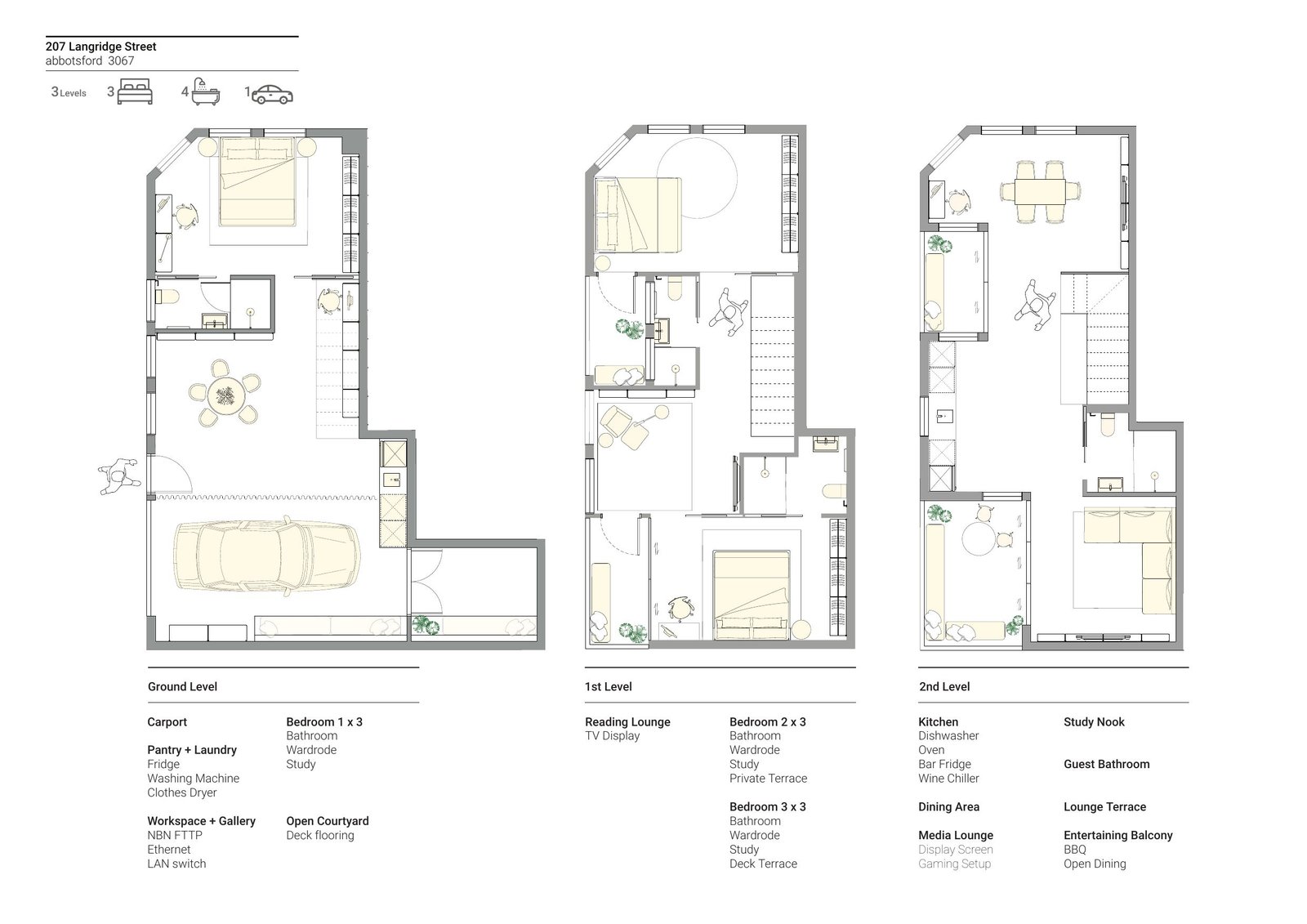
Inner-Abbotsford, at the seam of three suburbs.
207 Langridge sits where Abbotsford, Collingwood and Richmond meet. Abbotsford brings the river, the Convent and the food; Collingwood brings the coffee, the galleries and the music; Richmond brings the streets that connect it all to the CBD. The result is a walking-scale neighbourhood that behaves less like a suburb and more like a self-contained quarter.
Morning — coffee & pastry
Proud Mary, Industry Beans, Everyday Coffee, Pillar of Salt, Stovetop and Kabuki are all within a short walk — one of Melbourne’s densest specialty-coffee clusters. Lune Croissanterie sits five minutes further on Rose Street.
Groceries — the weekly shop
Aldi Abbotsford on Victoria Street and Hive Abbotsford on Nicholson Street handle the staples. Victoria Gardens Shopping Centre covers Coles, Kmart and speciality retail. Victoria Street grocers — Minh Phat, Viet Hoa — cover fresh produce, seafood and pantry goods.
Lunch & dinner
Victoria Street is the defining Vietnamese strip — pho, banh mi, hot-pot, late-night dumpling houses. Gertrude Street does the other half of the meal: bistros, wine bars, chef-driven dining rooms. Smith Street carries the late-night weight — pubs, pizza, cocktail bars and small-plates rooms.
The view — and the Carringbush
The focal view from the top-floor terrace is of the Carringbush Hotel, a Victorian-era pub built in 1889 and still operating. It anchors the skyline above Langridge Street. The pub is a working neighbourhood living room.
Parks & river
The Yarra Trail is ten minutes’ walk away — Melbourne’s riverside running, walking and cycling route, leading out to Dight’s Falls, the Abbotsford Convent, the Collingwood Children’s Farm and Studley Park.
Fitness & wellness
Fitness First Victoria Gardens, F45 Collingwood, the Collingwood Leisure Centre (with its Olympic pool), Humming Puppy yoga and KX Pilates Collingwood. Cycling stores Commuter and Curve sit on Smith and Gertrude.
Workspaces
WeWork Collingwood, Hub Australia, The Commons, WOTSO and Collingwood Yards — a dense cluster of flexible workspaces within walking distance, in case the home office is not the right room for the day.
Culture & live music
The Abbotsford Convent, Collingwood Yards and Gertrude Contemporary for visual art and studios. The Tote, The Gasometer, The Workers Club and The Curtin for live music. The Convent’s Sunday markets and open studios run year-round.
Major venues
The MCG, AAMI Park and Marvel Stadium are reachable on foot or by a short tram ride — sport and live music without a car.
Transport
Collingwood Station is a six-minute walk. Trams 12 and 109 link Victoria Street and Collins Street to the Docklands. The Yarra bike corridor runs behind the property; the CBD is a fifteen-minute ride or a short tram.


Approximate distances
| Melbourne CBD | ~3 km |
| Yarra Trail | 10 min walk |
| Collingwood Station | 6 min walk |
| Victoria Street (dining) | 5 min walk |
| Aldi Abbotsford | 6 min walk |
| Abbotsford Convent | 15 min walk |
| Lune Croissanterie | 10 min walk |
| MCG | ~2 km |
| Trams 12 & 109 | on Victoria St & Church St |
A 20‑minute neighbourhood.
Plan Melbourne — the state’s long-term planning strategy — uses the term “20‑minute neighbourhood” to describe a place where most daily needs can be met within a twenty-minute walk or short cycle from home. Shops, cafés, parks, medical services, schools, community facilities and public transport, all inside a walkable radius.
Inner-Abbotsford is one of the few Melbourne neighbourhoods where this idea is already built into the fabric of the place. Fine-grained streets, mixed-use blocks, continuous retail on the high streets, tree-lined footpaths, protected bike routes on the boundaries, and a walking-scale density of services — coffee, groceries, schools, medical, parks, workspaces, culture — mean that day-to-day life here is measured in minutes on foot rather than minutes behind the wheel.
The concept has a design lineage too. Monocle magazine and its podcast The Urbanist have championed the model for over a decade, profiling districts such as Alvalade in Lisbon and Fremont in Seattle — places where housing, schools, markets and parks sit within easy walking distance and where independent retail and strong neighbourhood identity anchor the day-to-day. The fifteen-minute city, Melbourne’s own twenty-minute policy, and the local character of Abbotsford all point at the same idea: live well, locally.
Questions or curiosity — always welcome.
If you’d like to know more about the home, the neighbourhood, or the build, send a note below.